Industrial 3D printing services from our workshop near Cambridge: SLA, Carbon DLS, FDM and DLP, with next-day turnaround on most jobs, tolerances to ±0.15 mm and overnight delivery across the UK. Check form, fit and function early, so you learn faster and avoid costly decisions.
SLA delivers the detail. FDM handles the volume. We choose the route that fits the job.
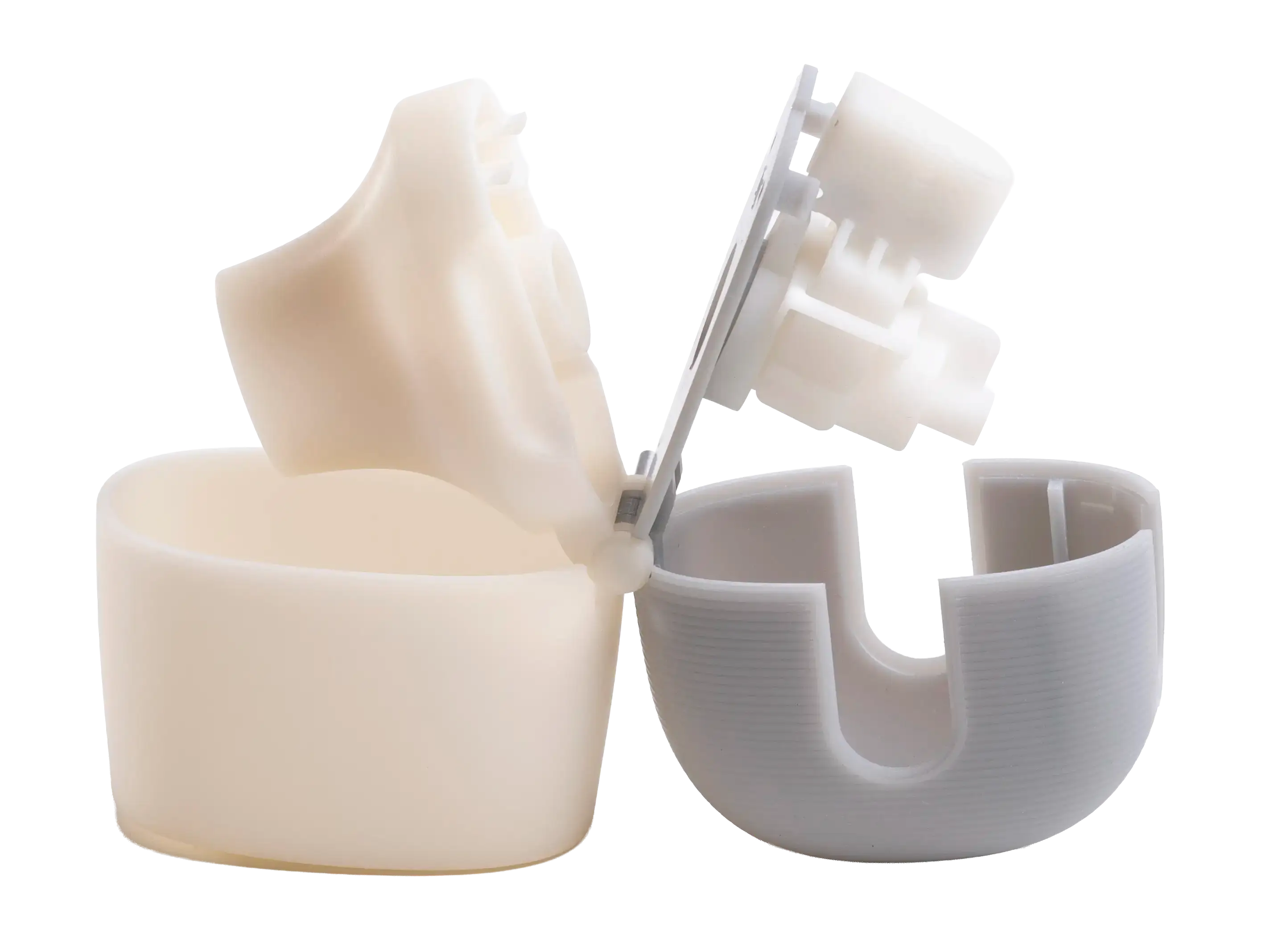
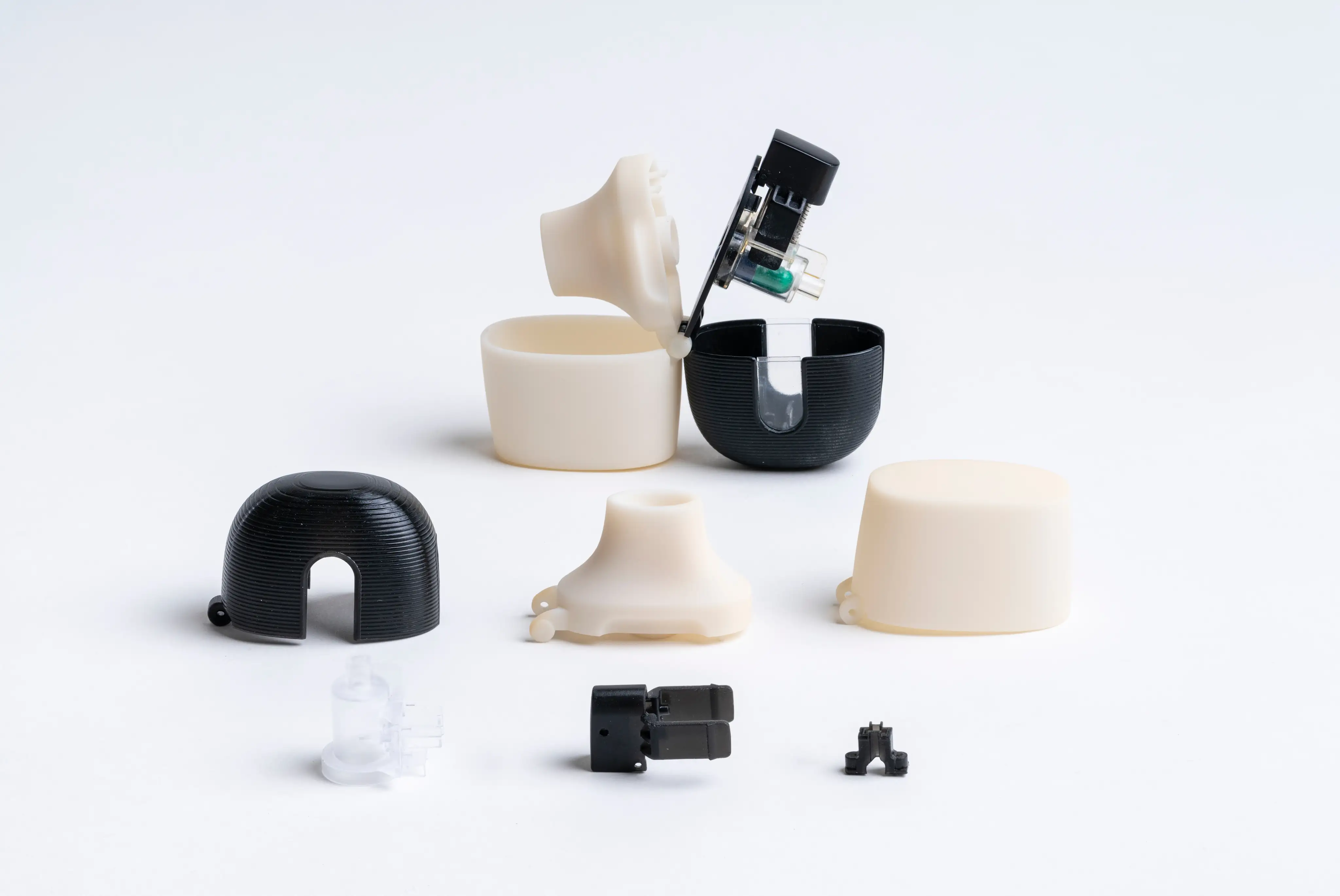
SLA printing delivers the precision needed for medical devices and intricate assemblies. It produces clean, accurate parts with fine detail and a high-quality surface finish. For transparent parts, see clear 3D printing.
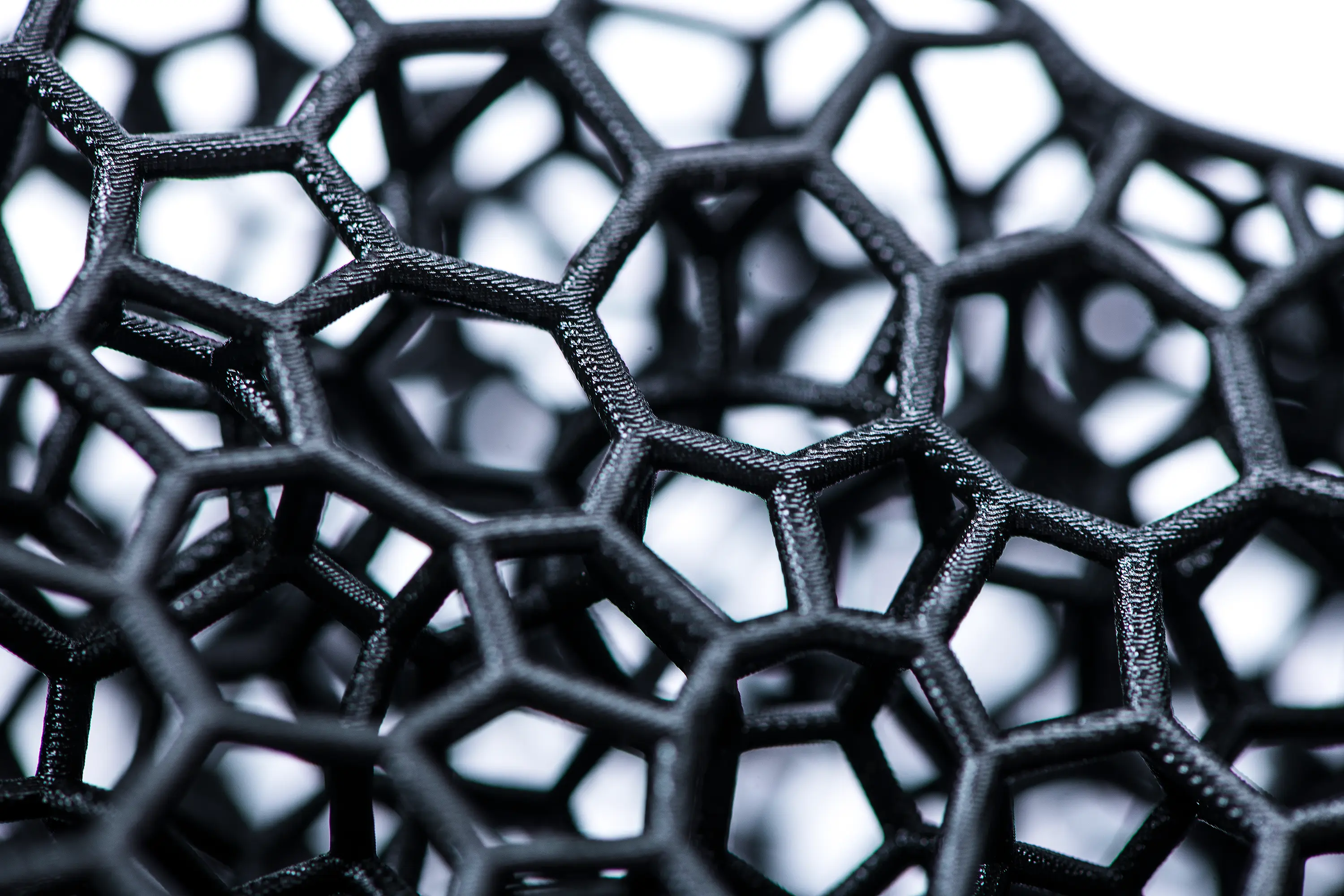
Used where stiffness, performance and repeatability matter, from engineering prototypes to end-use parts.
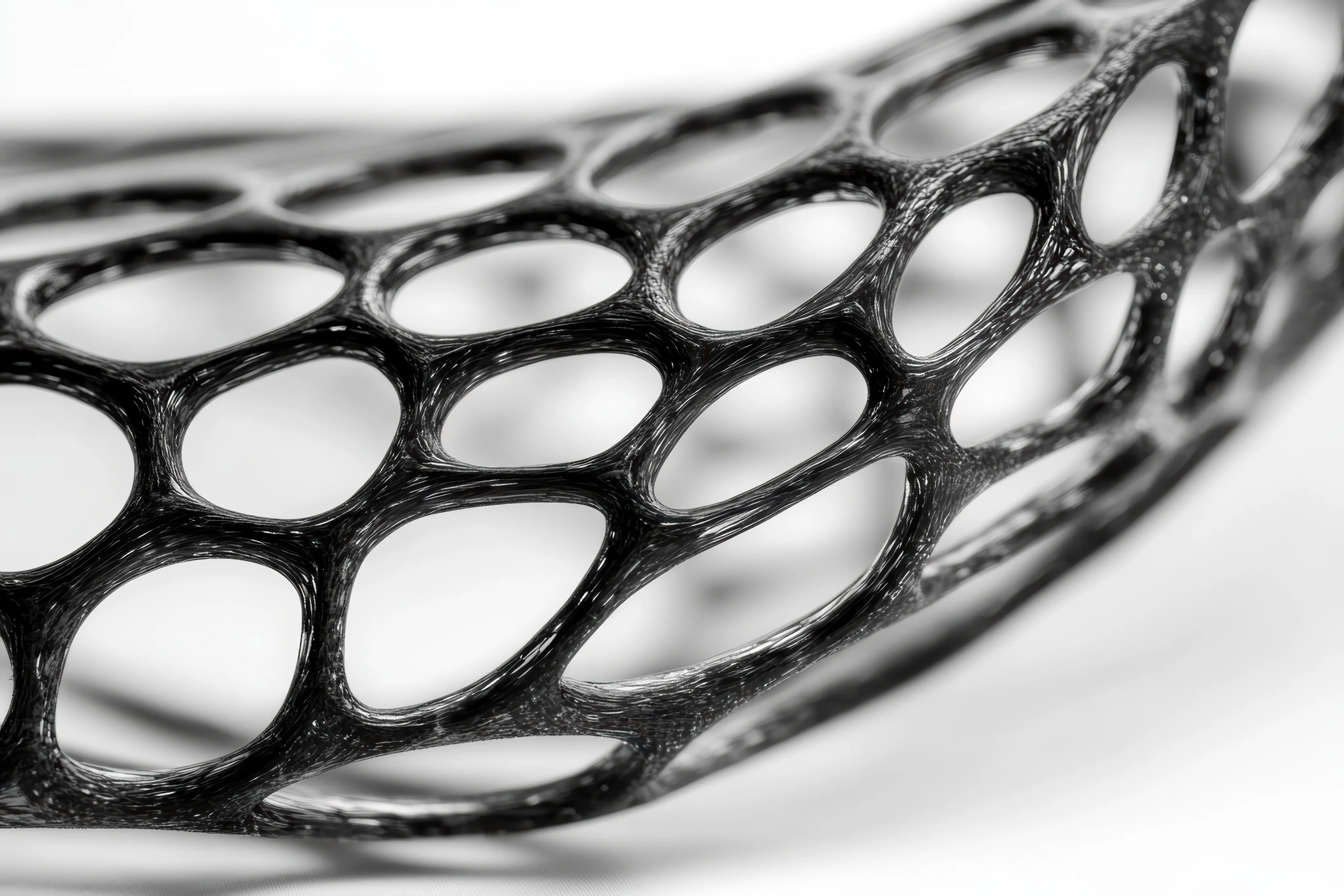
FDM builds parts in real thermoplastics, up to 800 × 800 × 1,000 mm, and holds ±0.4 mm on suitable rigid parts. It suits functional prototypes, jigs and fixtures, and short runs where strength, size and practicality matter most.
For big parts, see large format 3D printing.
See FDM 3D printing for the filaments we run.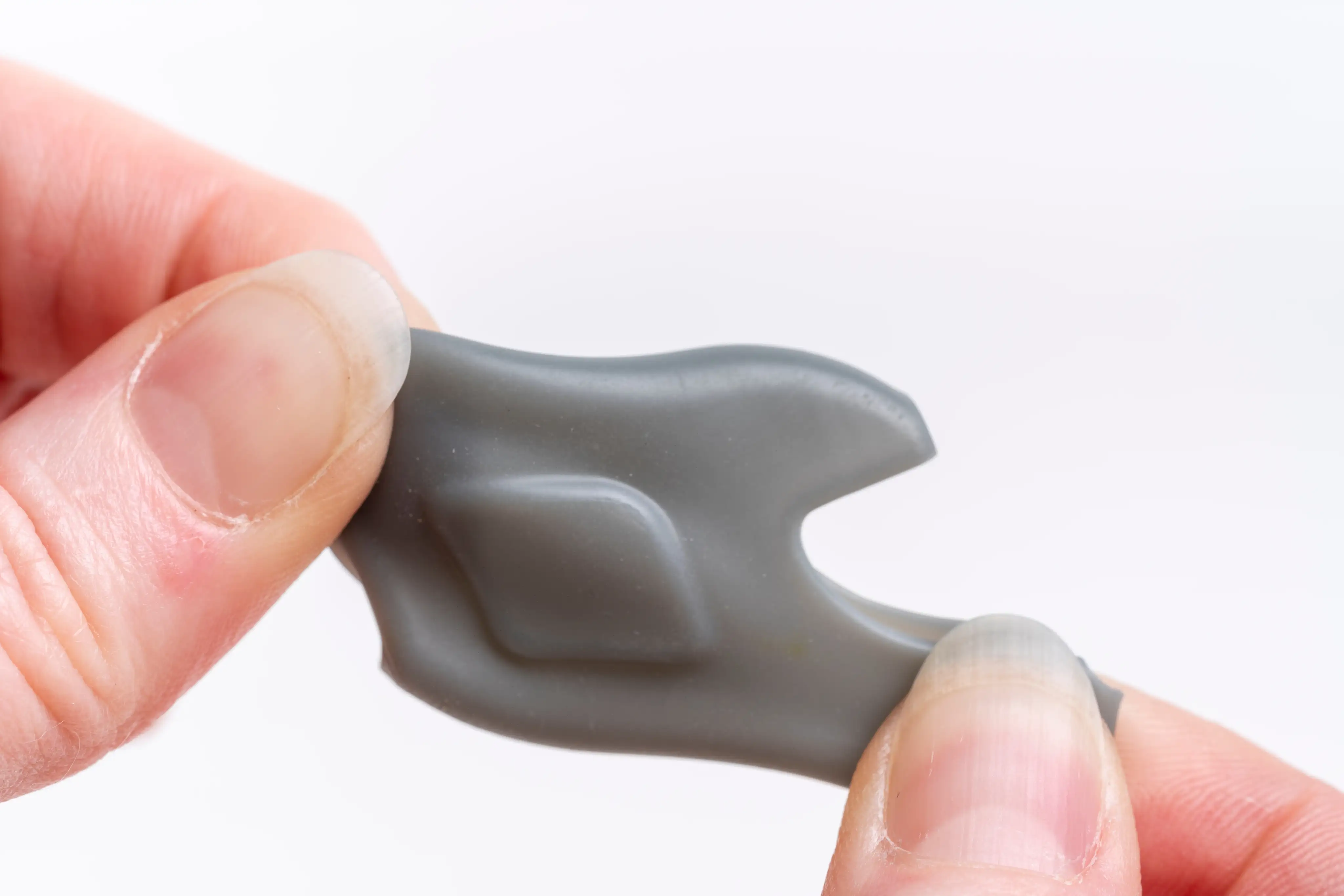
Parts print overnight. You see results in the morning. That pace helps you iterate faster and make decisions based on real hardware, not renderings.
DLP resins include AMD-3 for high-resolution models, Sunlu Nylon-Like for tougher parts and SuperHDT for high temperatures.
Parts print overnight you see results in the morning
That pace lets you iterate fast and make decisions based on actual hardware, not renderings
Our 3D printing department runs with substantial capacity and a standard 24 hour turnaround across a range of materials. High and standard resolution parts can be produced simultaneously on the same large format machine. Dimensional accuracy is achieved through process knowledge rather than default settings our technicians understand SLA and Carbon DLS printing well enough to make the right build orientation decisions for each part.
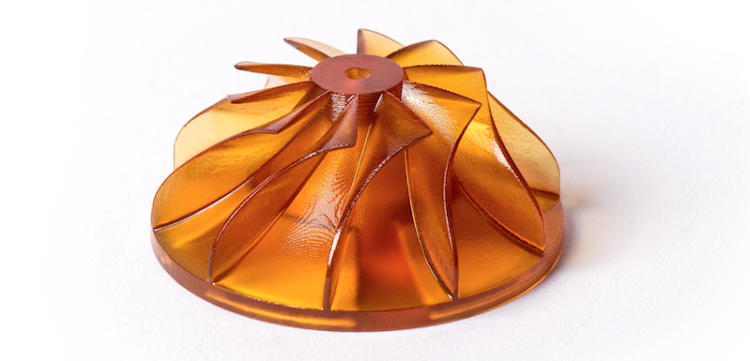
Stereolithography delivers the tolerances medical work demands. We print surgical guides, diagnostic housings and complex assemblies where accuracy cannot slip.
More on medical device prototyping, including biocompatible materials and NDAs.
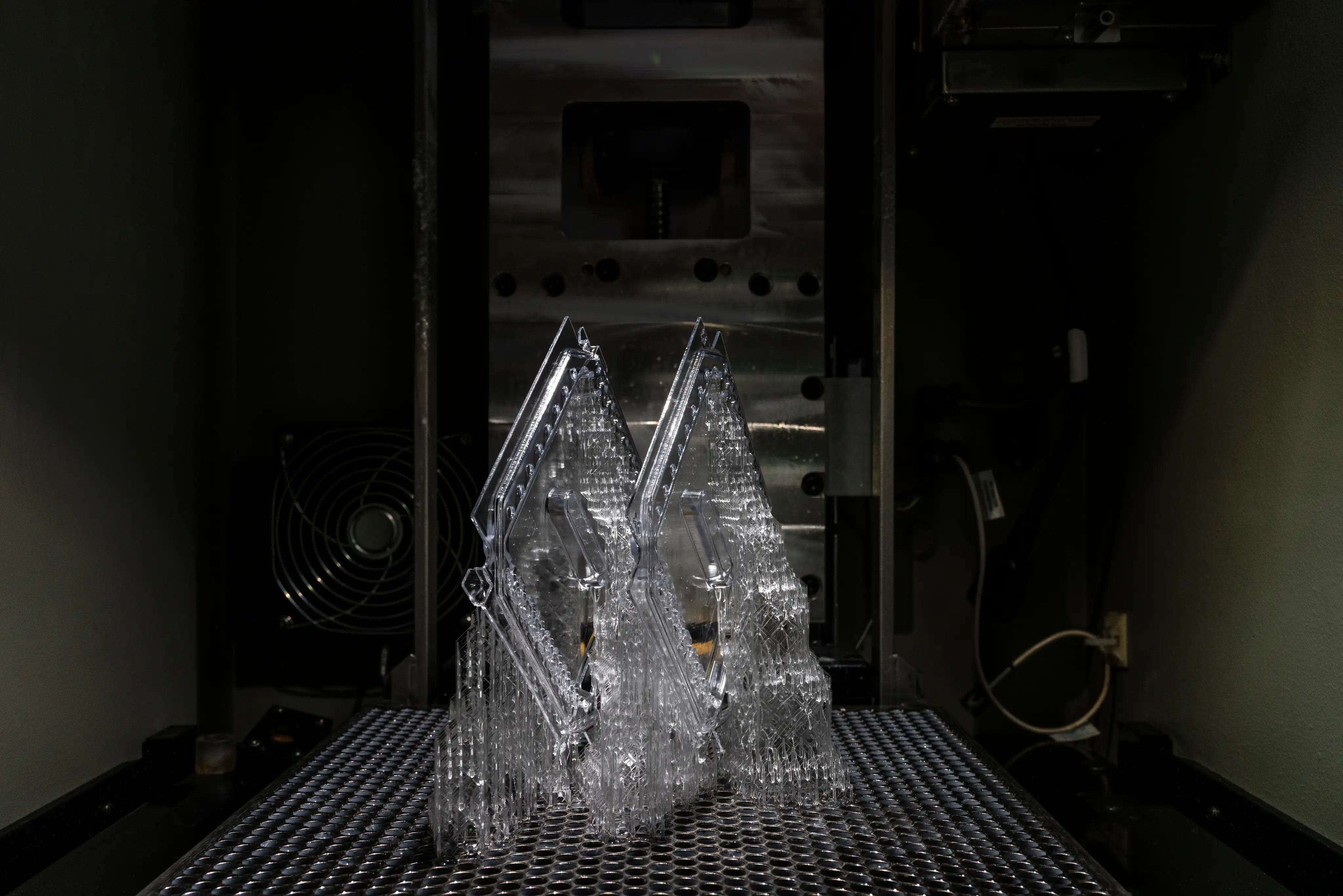
Medical-grade resins Aerospace polymers Consumer thermoplastics
We match material to application so your parts perform where it counts
See every material and data sheet we run, read about 3D printing in Cambridge, or see what affects the price.
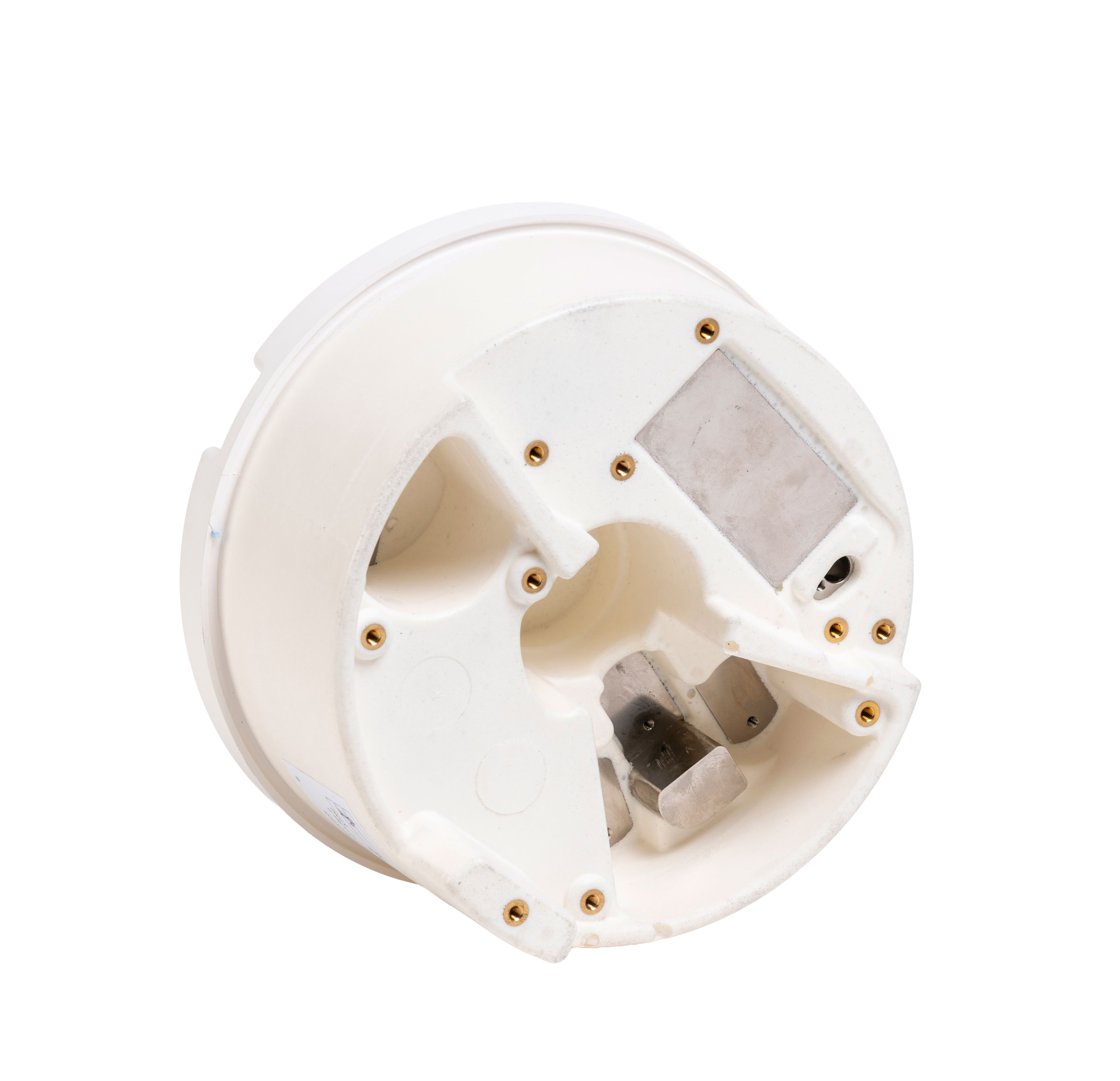
Insert selection is reviewed against material specification on every CAD file before production begins. The choice between threaded inserts, self-tappers and helicoils is not incidental - it affects thread integrity, pull-out strength and long term performance. Where the specified insert is not the right solution for the material or geometry, we raise it with the customer directly and agree the correct approach before committing to production.
Fast cycles. Tight tolerances. Material choices that hold up.

Get answers about our 3D printing capabilities and material options
It depends on the part: its size and volume, the process and material, how many you need and the finish. There is no tooling or set-up charge, so a single part is affordable and the price per part falls in a batch. We quote each job from your CAD, and our pricing guide explains what affects the price.
A 3D printer builds a part layer by layer from a CAD file. SLA cures liquid resin with a UV laser, Carbon DLS cures resin with projected light, and FDM lays down melted plastic filament. Each layer bonds to the one below until the part is complete. We then clean it, remove any supports and finish it.
We don't 3D print metal. For metal prototypes and parts, we CNC machine from solid aluminium, steels, stainless steel and brass, so you get the real material. SLA parts can also be plated in copper, nickel or gold for a metallic finish, on small parts up to about a 150 mm cube.
Prototypes for form and fit checks, working assemblies, show and photography models, clear parts such as light pipes, master patterns for vacuum casting, jigs and fixtures, and production batches of 20 to 200 parts or more, all without tooling.
Yes. Carbon DLS makes parts with injection-moulding-like strength, so it suits end-use components, and we have run batches of 1,000 small parts. SLA batches typically run from 20 to 200 parts, and our largest was 5,000. For metal parts or engineering plastics such as PEEK, we CNC machine instead.
There is no minimum order. SLA batches are typically 20 to 200 parts and can run to thousands; our largest was 5,000. Carbon DLS suits small parts in larger numbers, up to batches of 1,000. Every resin stays loaded on its own machine, so different materials can print at the same time.
Yes, on our FDM printers, in chopped carbon fibre filaments: PA6-CF, PPA-CF and ASA-CF, plus glass-filled PA6-GF. The fibre makes parts stiffer and more heat resistant than unfilled plastics. We don't print continuous-fibre composites. Carbon DLS is a different process, named after the company Carbon, and contains no carbon fibre.
Resins and engineering thermoplastics. SLA resins include Accura Xtreme, Accura 25, MPC12 Clear and WaterClear Ultra. Carbon DLS resins include MPU 100, EPX 82, RPU 70 and elastomers such as EPU 40. FDM filaments include PETG, TPU and carbon or glass-filled nylons. Our materials page lists them all, with data sheets.
SLA parts hold ±0.15 mm, built in 0.05 mm layers, and holes print about 0.05 mm undersize on average. FDM holds ±0.4 mm on suitable rigid parts. Where a feature needs a tighter tolerance, CNC machining holds ±0.10 mm on most work.
Our largest SLA part is 450 × 450 × 450 mm, in MPC12 Clear. FDM builds parts in one piece up to 800 × 800 × 1,000 mm, mainly in PLA, PETG and TPU. Larger designs can be split and the sections joined with adhesive or mechanical fixings. See large format 3D printing.
For SLA, walls can be 0.4 mm where supported and 0.8 mm where unsupported. Holes should be at least 0.4 mm, embossed text 0.4 mm and engraved text 0.6 mm. Hollow parts need two drain holes of at least 3 mm, and mating parts need about 0.1 to 0.2 mm clearance per side.
Yes. We print clear parts in SLA resins such as WaterClear Ultra and MPC12 Clear, then sand and polish them for clarity. They suit light pipes, windows, fluid paths and display models, and thinner walls give a more natural clear finish. See clear 3D printing for examples.
Yes. Carbon DLS elastomers such as EPU 40, EPU 45 and SIL 30 give rubber-like parts, and we print TPU filaments on FDM. For seals and gaskets in silicone or polyurethane rubber, casting is often the better route; see flexible gaskets.
Yes, in specialist resins. Carbon EPX 86FR and Liqcreate Flame Retardant HDT are flame-retardant, and Loctite IND147, SuperHDT and Phrozen TR300 are made for high temperatures. Check each data sheet for the rating you need, or tell us the operating temperature and we will suggest a material.
Choose SLA for fine detail, smooth surfaces and clear parts, and Carbon DLS for strong, functional or end-use parts. FDM suits large parts and real thermoplastics such as nylon and PETG, and DLP covers a few specialist resins. Tell us what the part has to do and we will recommend the process.
Yes. Both terms mean building a part layer by layer from a digital model. Additive manufacturing is the formal name used in standards and industry, and 3D printing is the everyday term.
Yes. We print SLA, Carbon DLS, DLP and FDM in our workshop in Whittlesford, near Cambridge, and finish the parts in the same building. We source SLS and MJF parts through partners for prototyping projects, and finish those in-house too.
Yes. We fit bonded threaded inserts, and we check the insert choice against the material on every CAD file before production. Where a self-tapper or helicoil would suit the material or geometry better, we raise it with you first.
It depends on the process and material. Carbon DLS parts have injection-moulding-like strength, FDM parts are made in real thermoplastics such as nylon, and tough SLA resins suit snap fits and mechanisms. Each material page lists the key properties from the maker's data sheet.
Send us your files or describe what you need and we'll quote it fast