20 to 500 matching parts, finished, assembled and packed, ready for consumer research, usability studies and launch.
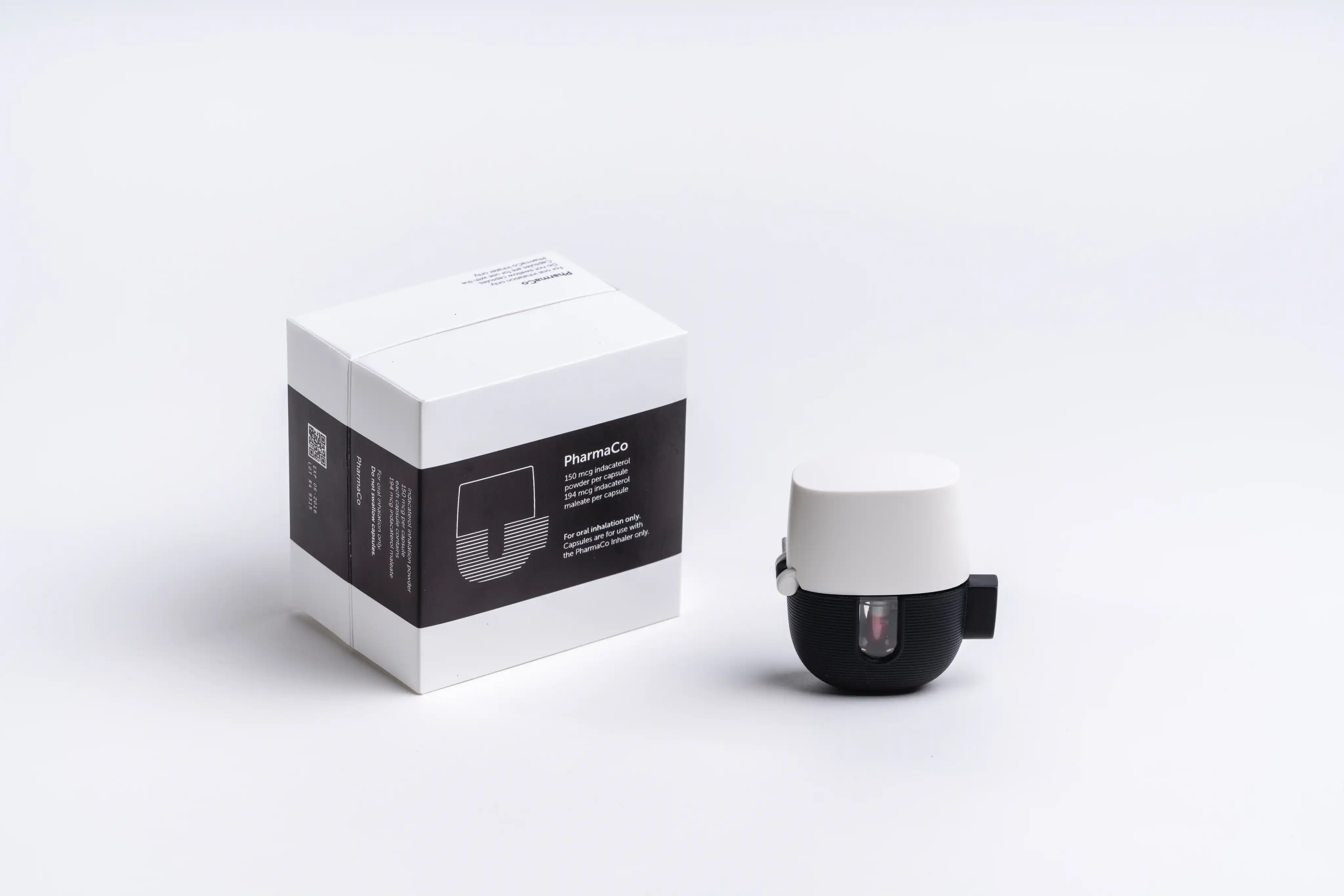
Complete Fabrication makes batches of identical prototypes, and the packaging that goes with them, for hall tests, user trials, usability studies and early launch stock. A batch is usually 20 to 500 parts. We make them in our workshop in Whittlesford, near Cambridge, by SLA 3D printing, vacuum casting or Carbon DLS, then finish, assemble and pack them in the same building, so every unit a tester picks up looks and works the same.
A hall test, also called a central location test, is a type of face-to-face market research. A research agency books a venue in a busy place, such as a shopping centre, community hall or conference centre, recruits members of the public on the day, and asks them to look at, handle or use a product, then answer questions about it.
Because everyone sees the product in the same controlled setting, brands use hall tests to compare designs, check that a pack stands out and is understood, and choose between product or packaging options before committing to production tooling and print runs. Food and drink brands have used them for decades. They are also used for consumer products, household goods and packaging.
Research agencies often plan around 200 or more respondents for each design being tested, and a study may compare several designs across several towns. That is why a hall test usually needs a batch of identical samples, not a single model.
People react to what they can see and hold, so the samples need to look like the finished product. Research agencies such as Ipsos say the most realistic way to test a new design is in person, with a physical mock-up people can interact with.
For hall tests we make:
We have made photography-ready kitchen appliance display models for the Argos catalogue, combining CNC-machined and SLA parts that we finished, assembled and branded in-house to a fixed deadline. Hall test samples need the same attention to finish.
Medical device teams test their designs with real users throughout development. Early formative studies often use five to eight people per user group, and the US FDA expects at least 15 participants per user group in summative (validation) testing. With several user groups, that quickly means tens of identical devices, and every one needs to look and behave the same.
We make trial batches in biocompatible materials, including Carbon MPU 100 and SIL 30, and equivalent resins for vacuum casting, and supply certificates of conformity for manufacture and materials when you flag the requirement at quote. Prototypes are not finished medical devices, so approvals stay with the device manufacturer. See medical device prototyping.
Many trial batches mix processes, for example cast housings with machined or printed internal parts. We price the options side by side and tell you which is best for your quantity and finish.
A hall test, or central location test, is market research where people are recruited at a venue and asked to look at, handle or use a product or pack in a controlled setting, then give their views. Brands use it to compare designs before committing to production.
It depends on how many designs, venues and days the research agency plans, and whether respondents handle the same samples in turn. Agree the number with your agency, then add spares. We can make anything from a handful of units to several hundred.
Yes. We design, print and assemble bespoke packaging, so the product and pack arrive together and look like the finished article.
SLA parts are ready in 24 hours as standard. Vacuum cast batches usually take two to three weeks from pattern approval. We give you a firm date when we quote.
Yes. We mix colours in-house, finish each batch to an approved first-off sample and inspect the parts before they leave.
To get a quote, send your CAD file, quantity and deadline to info@compfab.co.uk, call 01223 836837, or use the contact page.
Sources: hall test definitions from Kadence International and the DJS Research glossary; packaging research guidance from Ipsos and Decision Analyst; usability study sizes from Emergo by UL and the Johner Institute.