These are the ways we help you move from concept to something real
Choose what helps you learn faster, prove what matters and keep momentum. For fast prototypes from CAD, see our rapid prototyping services.

Accurate parts for early tests and design reviews in SLA, Carbon DLS, FDM and DLP, with a 24-hour standard turnaround on SLA. For tough thermoplastic parts, see FDM 3D printing. For transparent parts, see clear 3D printing.
Precision-machined parts for tight tolerances, repeatable quality and production-ready decisions

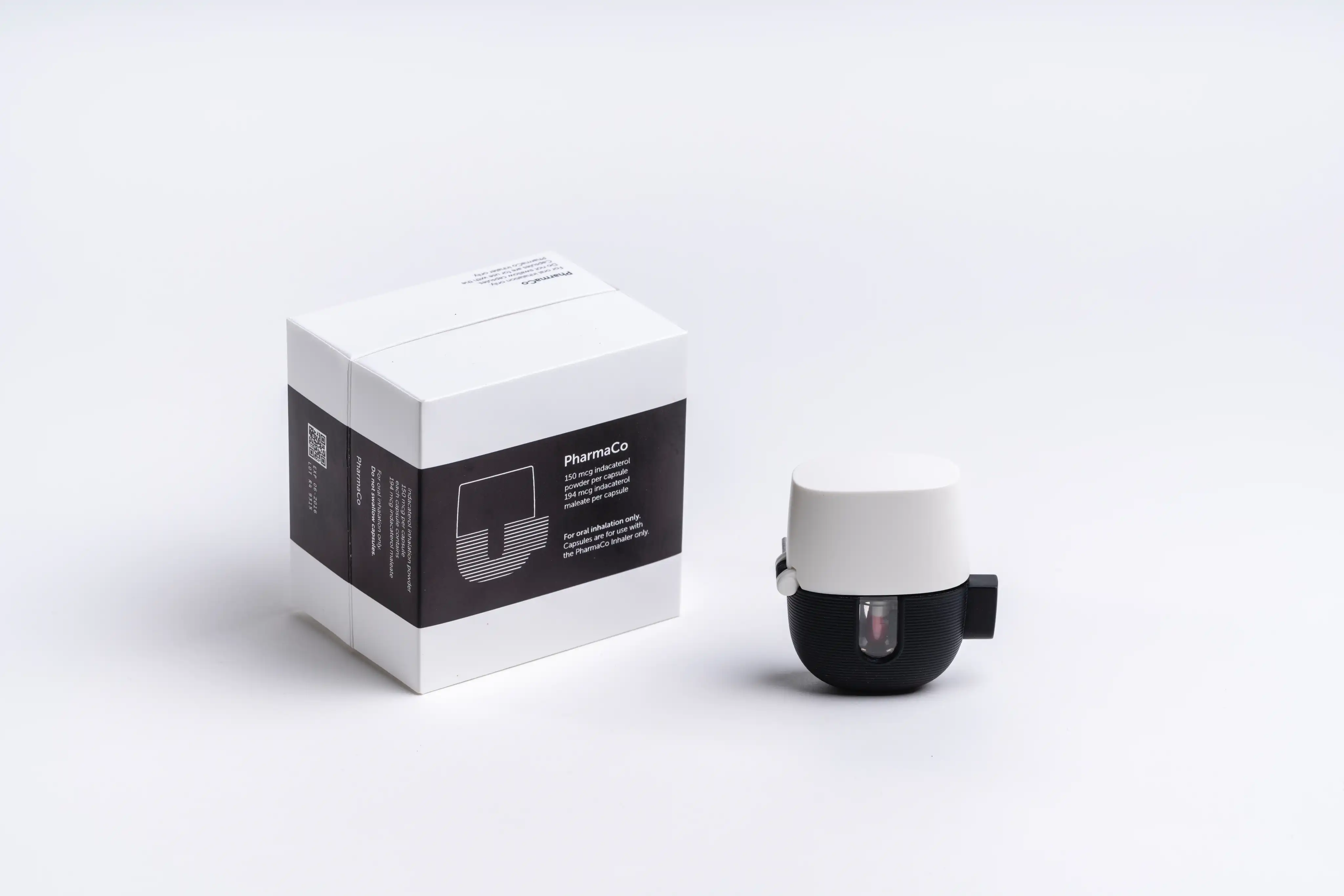
Looks-like, works-like models with inserts, assemblies and electronics fitted, ready for user trials, investor demos and design sign-off. See our model making services.
Colour matched to Pantone, RAL or your sample, with metallic and soft-touch coatings and VDI textures, from two in-house spray booths and our own paint mixing system.


Silicone and polyurethane seals and gaskets cast to your specification, with moulds made in-house, for prototypes and production runs.
Self-coloured polyurethane parts close to injection-moulded quality, in batches of 10 to 500, from a team that has been vacuum casting since the 1980s.


Not every project fits one process. We often combine them: an SLA master pattern for vacuum casting, CNC inserts in a cast housing, then paint and assembly.
We refine ideas into buildable designs, with manufacturing, assembly and real-world use in mind. We also work as the making partner for design consultancies.


Bridge production runs of 1 to 500+ units while your production tooling is being made.
Medical devices need biocompatible materials and paperwork; consumer products need a finish that survives a design review. We plan the process, material and schedule before any machine starts, because the wrong process usually costs more time than it saves. To compare tolerances and lead times side by side, see our process comparison table.
Complete Fabrication at a glance
Explore 3D printing in Cambridge, vacuum casting, medical device prototyping, our materials and the pricing guide.
SLA in 24 hours as standard, CNC in 3 days, vacuum casting lead time confirmed at quote.

SLA to ±0.15 mm, CNC to ±0.10 mm, vacuum casting to about ±0.2 mm on small parts and up to ±0.7 mm on large castings.

Certificates of Conformity for materials and manufacture, NDAs as standard, and ISO 9001 certified.
The work speaks for itself. These numbers show the scale, speed and consistency behind it.

From concept to production across multiple sectors
Medical, defence, robotics, aerospace, automotive, marine and consumer products, among others
Most of our biggest clients have worked with us for close to two decades
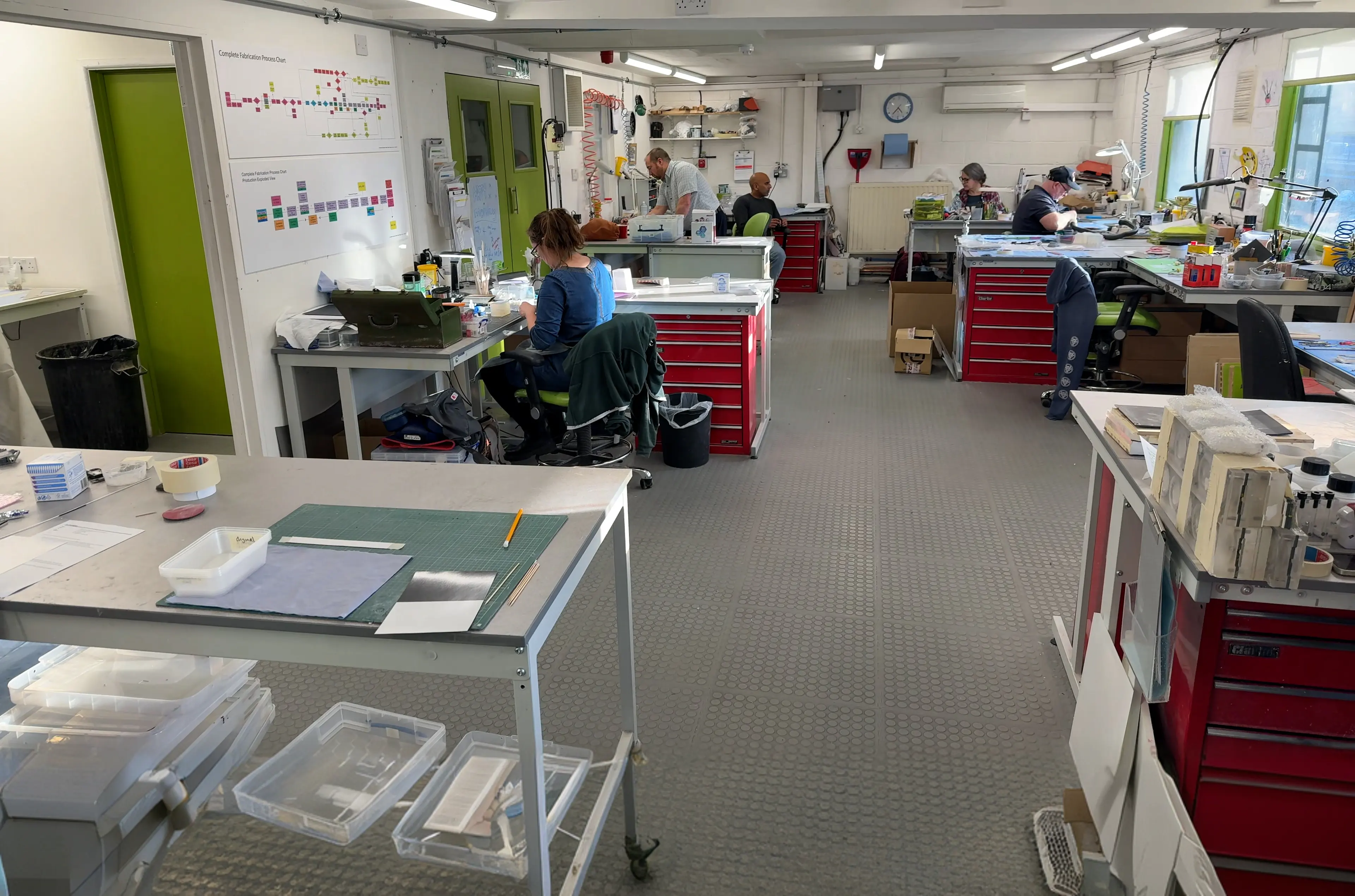
Yes. In our Whittlesford workshop we develop designs and check them for manufacture, make prototypes by SLA, Carbon DLS, FDM, CNC machining and vacuum casting, then run small batches, paint, finish, assemble and pack. You deal with one team from the first model to the finished parts.
Yes. We make prototypes and small batches for product teams across the UK, with overnight delivery to all areas of the UK. Clients near Cambridge can collect from the workshop or use our local delivery.
Send us your CAD or drawings, the quantity and what the part has to do, and we will recommend the route. As a guide: SLA for detailed prototypes, CNC machining for metal and production-grade plastics, Carbon DLS for tough functional parts, and vacuum casting for 10 to 500 parts in production-like plastics.
3D printing (SLA, Carbon DLS, DLP and FDM), CNC machining, vacuum casting, painting and finishing, model making, trial batches, low-volume production, flexible gaskets and design for manufacture reviews. Everything is made, finished and assembled in our workshop near Cambridge.
Yes. We make plastic prototypes by SLA, Carbon DLS and FDM 3D printing, by vacuum casting polyurethanes that behave like production plastics, and by CNC machining engineering plastics such as ABS, nylon, acetal, polycarbonate, acrylic and PEEK. We recommend the process for your quantity, finish and test.
Yes. We make block and appearance models for design reviews, photography and investor meetings, looks-like, works-like prototypes, and full-size display models, all made, painted and assembled in our own workshop. See model making.
Yes. We make low-volume batches, mostly scientific and medical instrument housings in the low hundreds, by vacuum casting, CNC machining and 3D printing, then finish, assemble and inspect them before dispatch. Bridge batches can cover the wait for production tooling.
Yes. We make batches of 20 to 500 identical prototypes, finished to an approved first-off sample and checked unit by unit, plus the packaging to go with them. See trial batches.
Yes. We design, print and assemble bespoke packaging, so you can test the pack and the unboxing alongside the product.
Yes. We cast RTV silicones across most Shore hardnesses and polyurethane elastomers in tools made in-house: CNC-machined tools for longer runs, or 3D printed tools for quick, low-cost short runs. See flexible gaskets.
Yes. We check every file before we make it and tell you if a change would make the part stronger, cleaner or cheaper to make. For a fuller design for manufacture review, send your CAD, the quantity you expect and the finish you want.
Yes. We build looks-like, works-like prototypes with mechanisms, inserts and electronics fitted, ready for user trials and design sign-off.
Yes. We make jigs and fixtures, often by FDM in real thermoplastics. For the maker of the BMW Mini dashboard assembly, we designed jigs that took production to a 100% pass rate. See the production jigs case study.
Yes. We print clear SLA parts and polish them, and machine and polish clear acrylic. For large parts, FDM builds up to 800 × 800 × 1,000 mm in one piece, and larger designs can be split and joined. See clear 3D printing and large format 3D printing.
Yes. We plate copper, nickel and gold in-house onto smaller parts, up to about a 150 mm cube, for a metallic finish on SLA prints.
Tell us what you are working on. We will help you choose the right route and get the first parts moving.