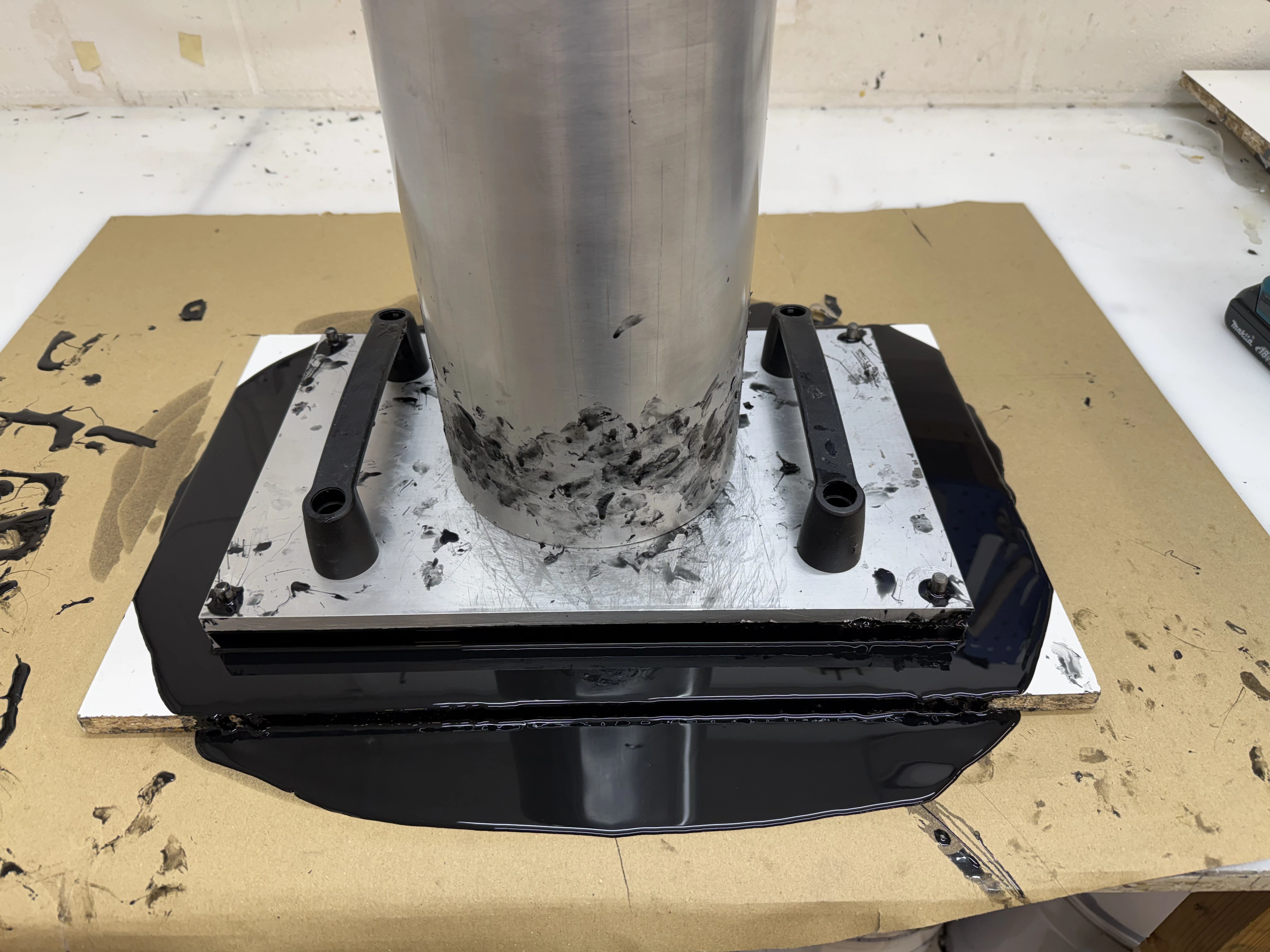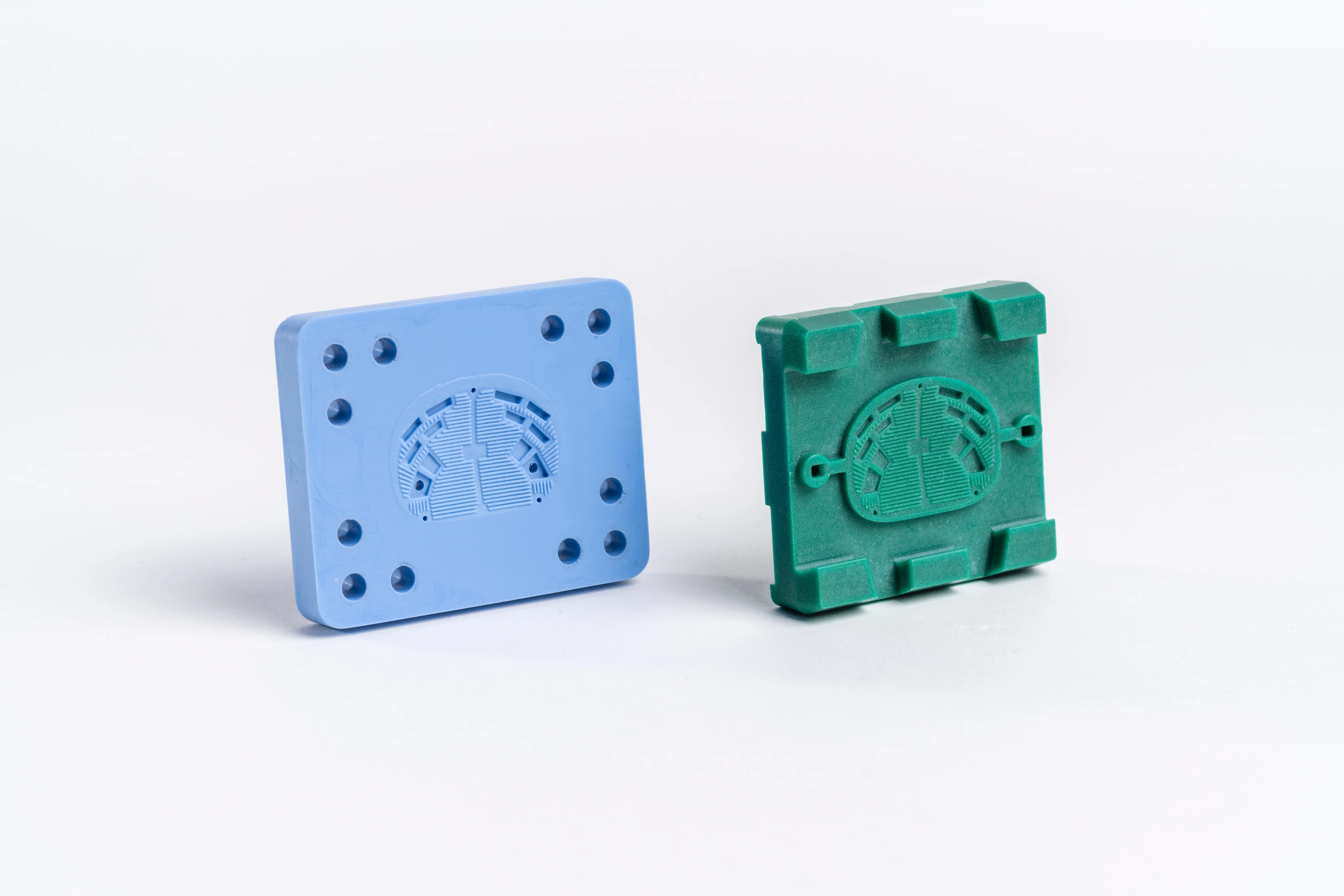
We cast flexible gaskets and seals in RTV silicone and polyurethane elastomer, using tools we make in-house. For longer runs, we CNC machine hard tools. For smaller runs that are needed quickly, we 3D print the tool instead, which costs less and is ready sooner. That lets us match the tooling to your quantity, deadline and budget, and you can test the seal on the real part before committing to full production.
Moulding Methods
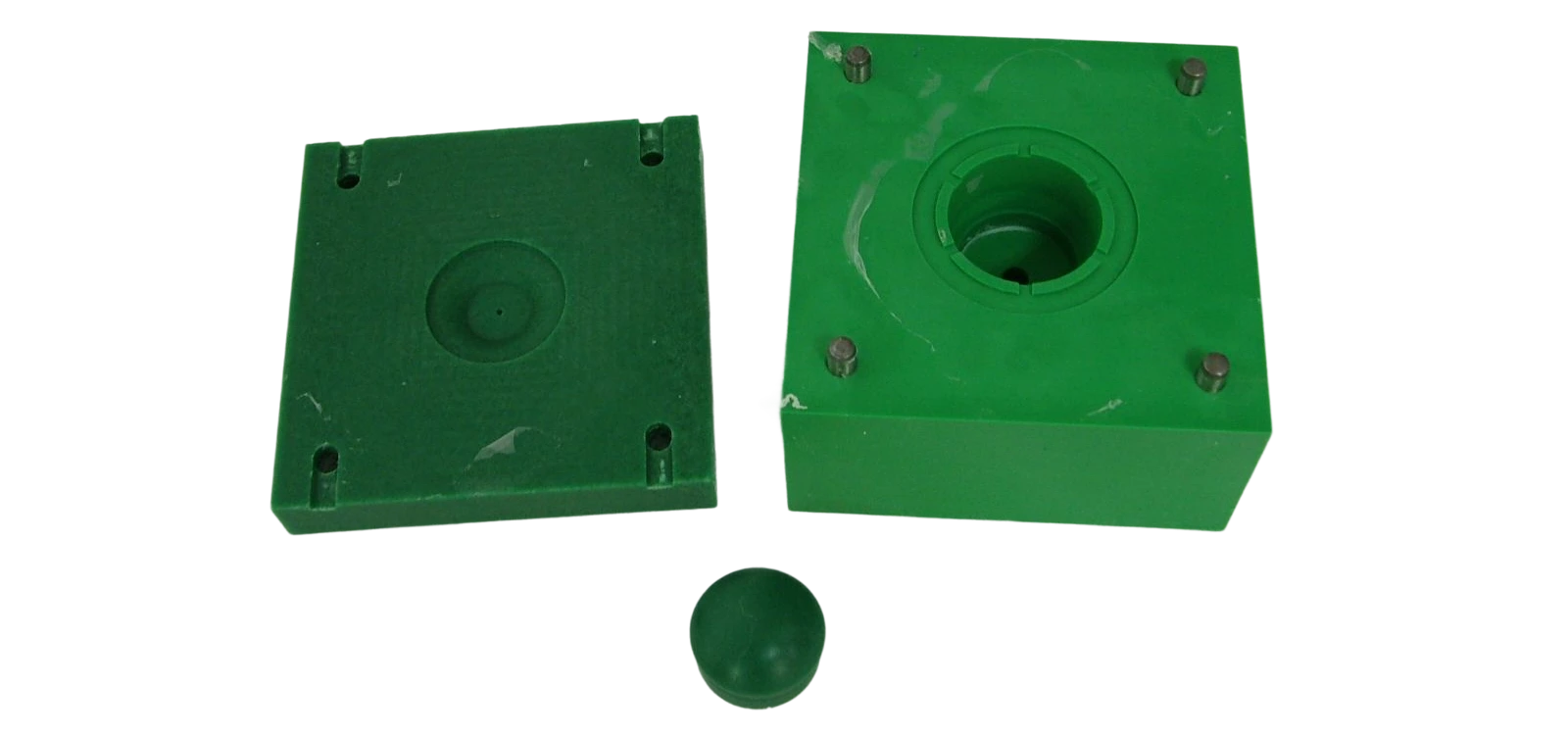
- Compression Moulding: A fast-curing silicone is placed into both halves of a 3D-printed mould, which is then clamped together, simulating mass production for prototyping.
- Gravity/Injection Filled Moulding: A two-part mould is used where liquid silicone is injected into a channel, filling the cavity from the bottom up and allowing air to escape through vents.
- Open-Face Mould: This method is suitable for simpler, one-sided designs, but it may lead to a non-level gasket with a meniscus edge.
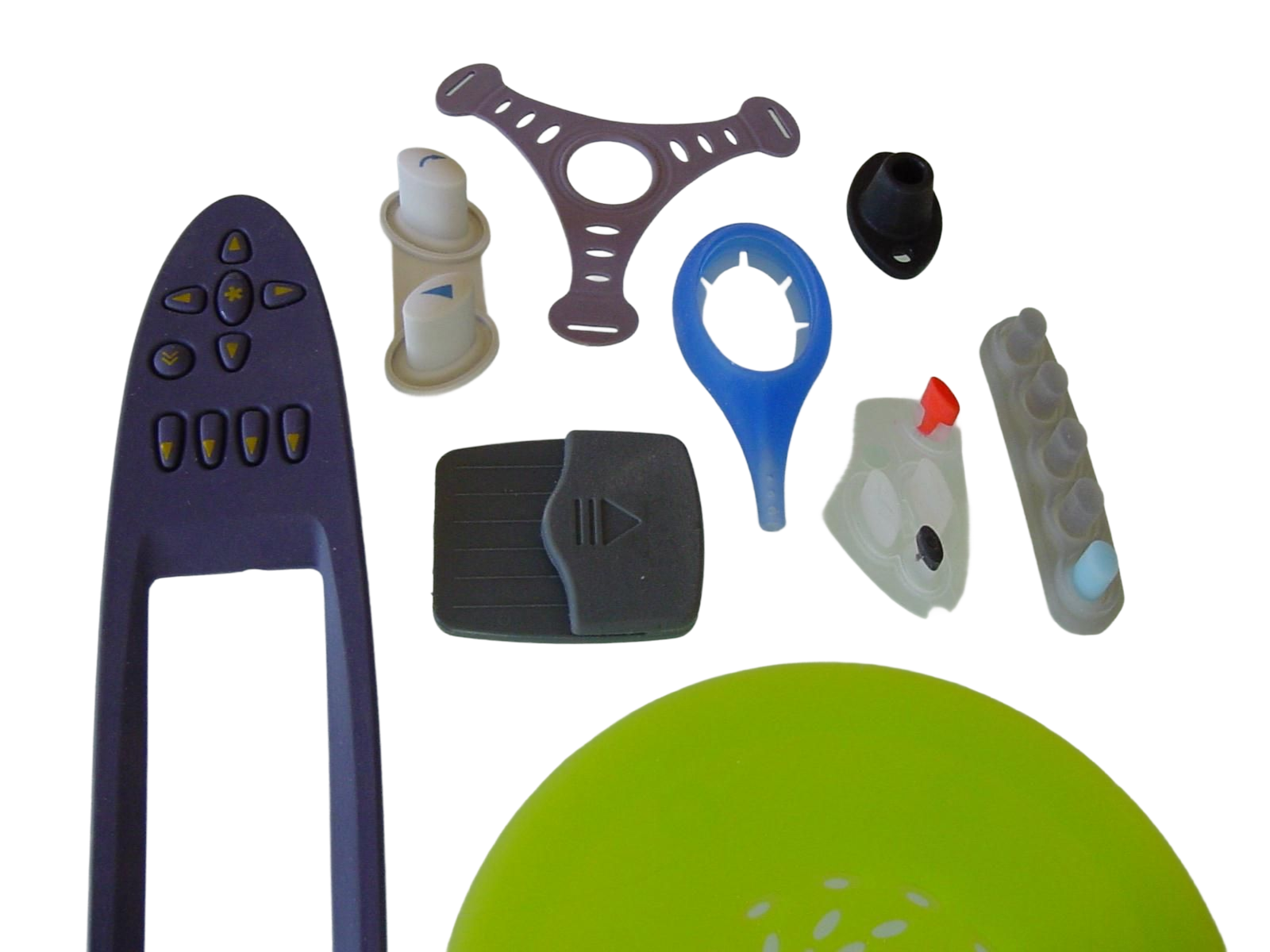
The right material depends on what the seal has to survive: heat, long-term compression, rubbing, or contact with skin. We cast in two families and can 3D print a third when a mould isn't worth making.
As products shrink, the gasket's shape matters as much as its material. These are the problems we see most often, and they are cheapest to fix before any tooling is made.
Testing a cast gasket on a printed or machined housing shows whether the design seals before you commit to production tooling. Our design for manufacture guide covers the wider design rules.
We cast many types of RTV silicone, as well as polyurethane elastomers, in tools we make in-house: CNC machined hard tools for longer runs, or 3D printed tools for quick, lower-cost short runs. For one-offs, we can also 3D print elastomers such as Carbon EPU 40, EPU Pro and SIL 30, or TPU.
Choose silicone for heat, long periods under compression and electrical insulation, which is why it suits electronics. Choose polyurethane for abrasion, tear resistance and parts that are handled or flexed often.
Most Shore hardnesses. We cast many types of silicone, from very soft to firm, so tell us the hardness you need, or how much the seal should compress, and we will match a material. In polyurethane, Poly PT Flex runs from Shore A20 to A85, and our printed elastomers range from Shore A35 (SIL 30) to Shore A88 (EPU Pro 90).
Material data sheets: Poly PT Flex, Carbon SIL 30 and Carbon EPU Pro 50/90.
From a single prototype to production runs. For smaller runs needed quickly, we 3D print the tool, which keeps the cost and lead time down. For longer runs, we CNC machine a hard tool. We choose the tooling to suit your quantity, deadline and budget.
Yes. In vacuum casting we can combine polyurethanes of different Shore hardness in one part, such as a soft grip or seal on a rigid body. We were the first to achieve two-shot vacuum casting. See vacuum casting.
For skin contact, Carbon SIL 30 is a soft, biocompatible-tested elastomer, and we supply the material data for your own assessment. For other medical work, see medical device prototyping.
Yes. We cast RTV silicone gaskets and seals at our workshop in Whittlesford, near Cambridge, in tools we make in-house, from single prototypes to production runs.
Yes. We offer design services to all clients, so we can design the seal or gasket together with your housing, then cast prototypes in silicone or polyurethane in tools made in-house. 3D printed tools suit quick, low-cost short runs, and CNC-machined tools suit longer runs.
Yes, for prototypes. Carbon elastomers such as EPU 40, EPU 45 and SIL 30 print rubber-like seals, and TPU on FDM can suit prototype gaskets. Sealing and compression-set performance need testing, and for demanding seals we compare cast silicone.
Send us the CAD for the part it has to seal and the hardness you need, and we will suggest a material and moulding method.