Covers, trays, blister packs and packaging inserts up to 600 × 600 mm and 220 mm deep, formed on tools we design and make at our workshop in Whittlesford, near Cambridge.
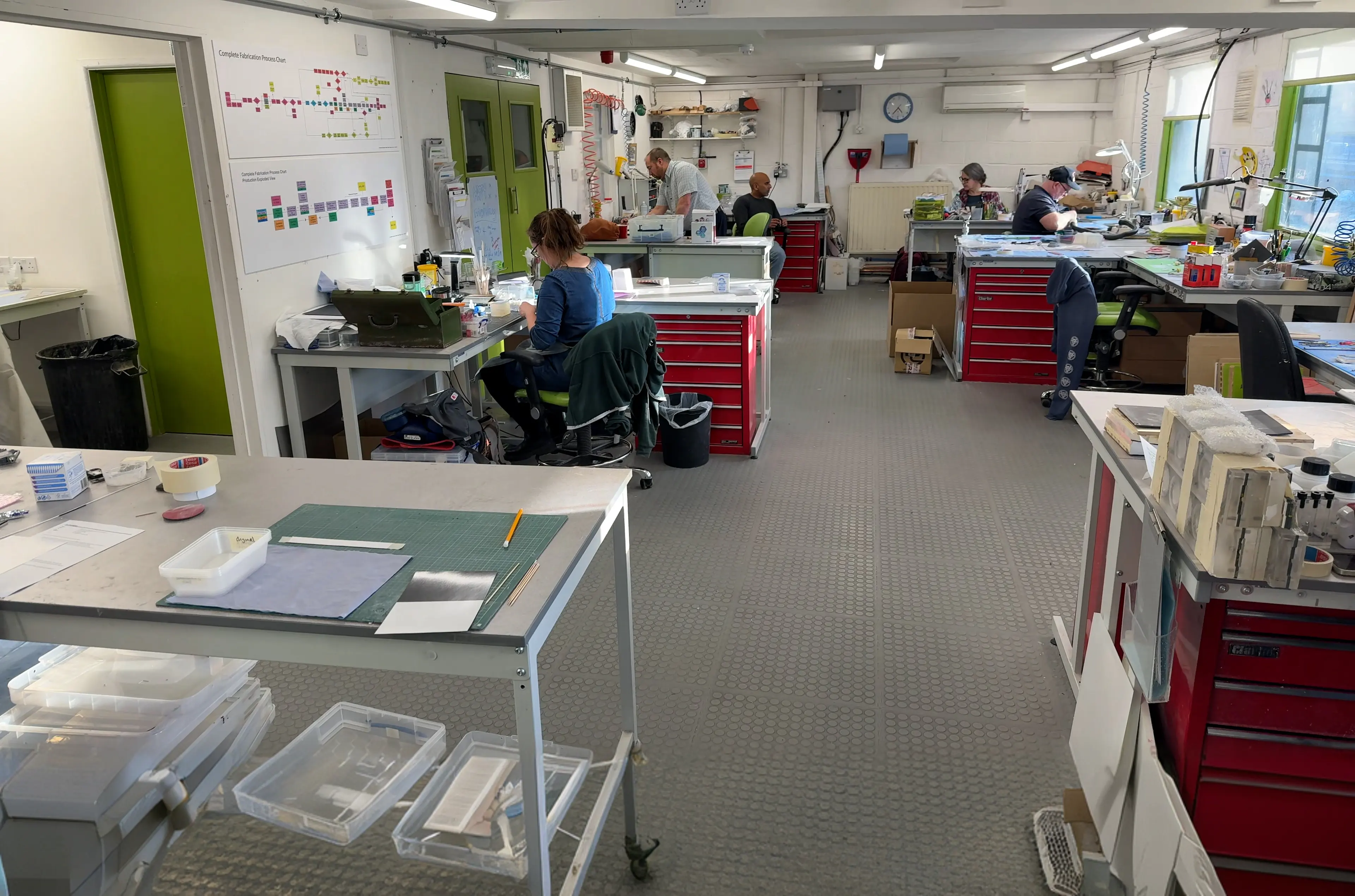
We vacuum form plastic parts up to 600 × 600 mm and 220 mm deep at our workshop in Whittlesford, Cambridge, from one-off prototypes to short production runs. We design and make the forming tool, form the sheet, trim each part and check its fit, so you get finished parts, not just formed sheet.
Vacuum forming suits thin-walled shells: covers, trays, housings, panels, blister packs and packaging inserts. If your part needs fine detail, varied wall thickness or solid features, vacuum casting is usually the better route, and we do both.
| Sheet | Thickness | Why choose it |
|---|---|---|
| PETG | 0.5, 0.75 and 1 mm | Clear, tough and easy to form. A common choice for blisters, clamshells and clear covers |
| PVC | Up to 2 mm | Rigid and clear, and widely used for blister packaging. We keep PVC to 2 mm because thicker sheet can shrink by up to 5% |
| HIPS (high-impact polystyrene) | 0.75 mm | Low cost, forms crisp shapes and paints well. Good for trays, inserts and model parts |
| Polypropylene | 0.8 mm | Flexible and chemical-resistant, and takes repeated bending. For flexible trays and parts that flex in use |
| Polycarbonate | 0.75 and 1 mm | Very tough and clear, with better heat resistance than the others. For guards, covers and windows |
Need a different plastic or thickness? Ask, and we will tell you what is possible.
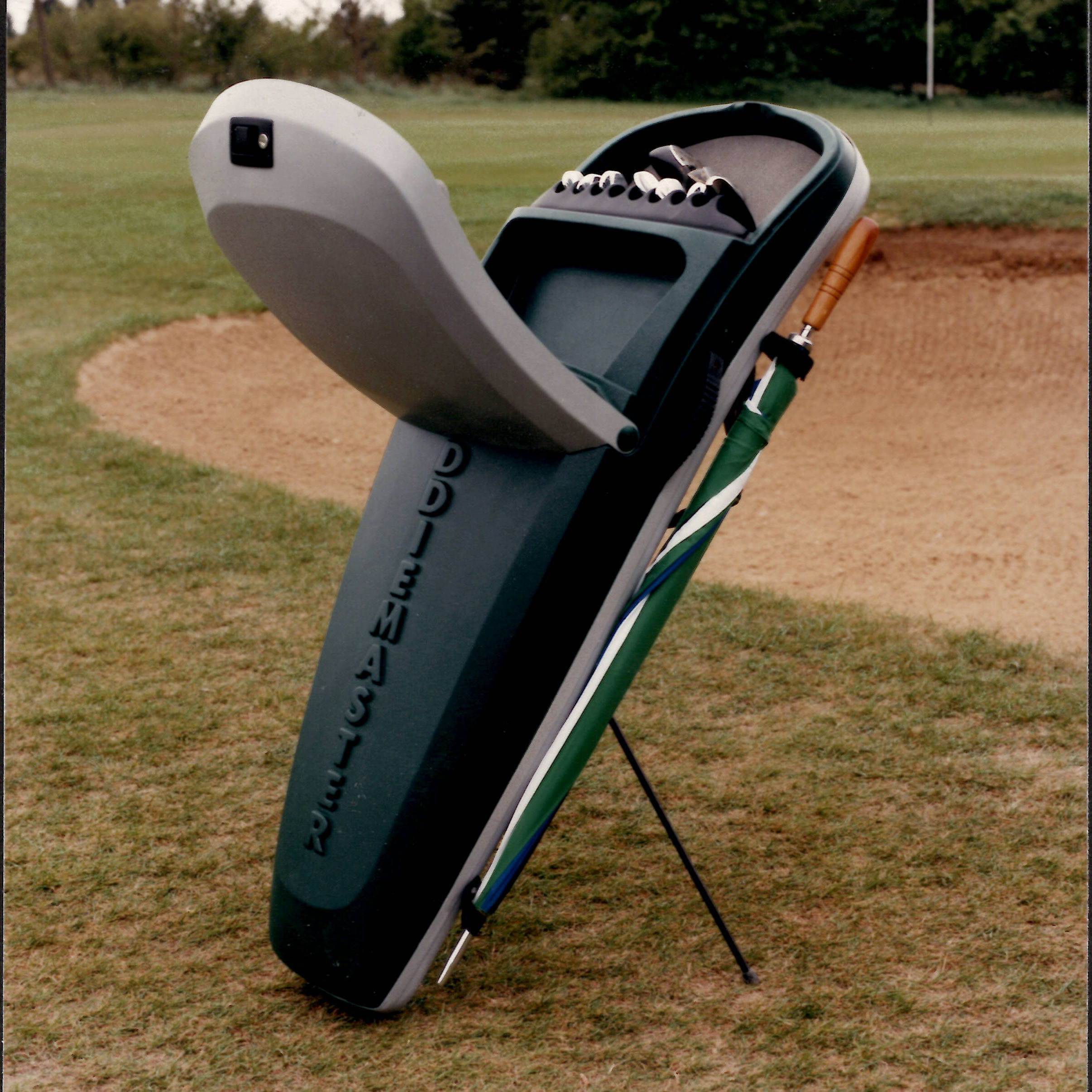
We have vacuum formed since our early days. In 1987 one of our first production jobs was a vacuum formed golf bag for Caddie Master.
When you are testing packaging, the blister or tray has to fit the real product, not a CAD guess. We form blisters and nests to your product, then adjust the tool and sheet thickness until the product clips or sits exactly as you want. Printed tools make those adjustments quick: we change the CAD and print again. We can pair formed parts with printed card cartons, machined foam inserts and sealed pouches, all made in-house, so the pack looks and opens like production for user trials, retailer presentations and photography. When the design is settled, we can make the short production run as well.
Vacuum forming is quick and low-cost, but it stretches the sheet, so a few design choices make a big difference. We check these as part of a design for manufacture review.
| Vacuum forming | Vacuum casting | |
|---|---|---|
| What it makes | Thin shells from plastic sheet | Solid parts from liquid resin |
| Wall thickness | Set by the sheet, thinner at corners | Can vary across the part |
| Detail | Softer, accurate on the tool side only | Fine detail on every surface |
| Size | Up to 600 × 600 mm, 220 mm deep | Up to 800 × 550 × 550 mm |
| Materials | PETG, PVC, HIPS, PP and polycarbonate sheet | Polyurethane resins, silicones and epoxies |
| Best for | Covers, trays, blisters and packaging | Housings and functional, clear or flexible parts |
| Tooling | One machined or printed forming tool | Silicone mould from a master pattern |
Not sure which you need? Send the CAD and we will recommend one. See our vacuum casting service.
Vacuum forming heats a plastic sheet until it is soft, then uses a vacuum to pull it tight over a tool so it takes the tool's shape. Once cool, the part is trimmed out of the sheet. It is used for thin-walled parts such as covers, trays and blister packs.
Our forming area is 600 × 600 mm, from sheets up to 690 × 690 mm, with a draw depth of up to 220 mm.
PETG, PVC, HIPS, polypropylene and polycarbonate. Most sheet is 0.5 to 1 mm thick, and we form PVC up to 2 mm. If you need a different plastic, ask.
Yes. We design every tool from your CAD and make it in-house. We machine tools in whatever material the job needs, and 3D print them when you want to try changes quickly.
Yes. We trim by hand, by router or by CNC, depending on the part and the quantity, and fit-check before dispatch. Parts can be painted in our paint shop and branded with pad printing, screen printing, transfers or vinyl.
Yes, for short runs, packaging especially. A formed blister, tray or cover can be the finished product when volumes do not justify production tooling.
Advantages: low tooling cost, fast tools (printed tools in particular), large parts and good economy at low volumes. Disadvantages: only one side is accurate, walls thin at deep corners, undercuts are hard to form and fine detail is not possible. For those parts, vacuum casting or 3D printing usually does better.
On a male tool the sheet is pulled over the shape, so the inside of the part is accurate. On a female tool the sheet is pulled into a cavity, so the outside is accurate. We choose the one that puts accuracy where your part needs it.
No. For parts heading for injection moulding, we can make prototypes and short runs by vacuum casting or SLA first, and get the design ready for a moulder.
Yes. We form parts at our workshop in Whittlesford, a short drive south of Cambridge and a two-minute walk from Whittlesford Parkway station, and deliver across the UK.
Send us your CAD and tell us the quantity and the material, and we will come back with a cost and a timeline. Contact us.