Complete Fabrication Ltd (CompFab) is a prototype manufacturer in Whittlesford, Cambridge, making prototypes for UK product teams since 1986. We turn your CAD into accurate models and working parts by SLA, Carbon DLS and FDM 3D printing, CNC machining and vacuum casting, then paint, finish and assemble them in-house. SLA files received by 5:30 pm are usually printed that night and delivered the next day, when capacity allows. CNC machining takes 3 days, with a 24-hour rush option. We are ISO 9001 certified.

Accurate parts for form, fit and design reviews. SLA, Carbon DLS, FDM and DLP, with a 24-hour standard turnaround and no rush fees. For tough thermoplastic parts, see FDM 3D printing.
Machined from solid aluminium, PEEK, stainless steel and engineering plastics, so your prototype has the strength of the production part. Most work is turned around in 3 days, with a 24-hour rush service if you need it.

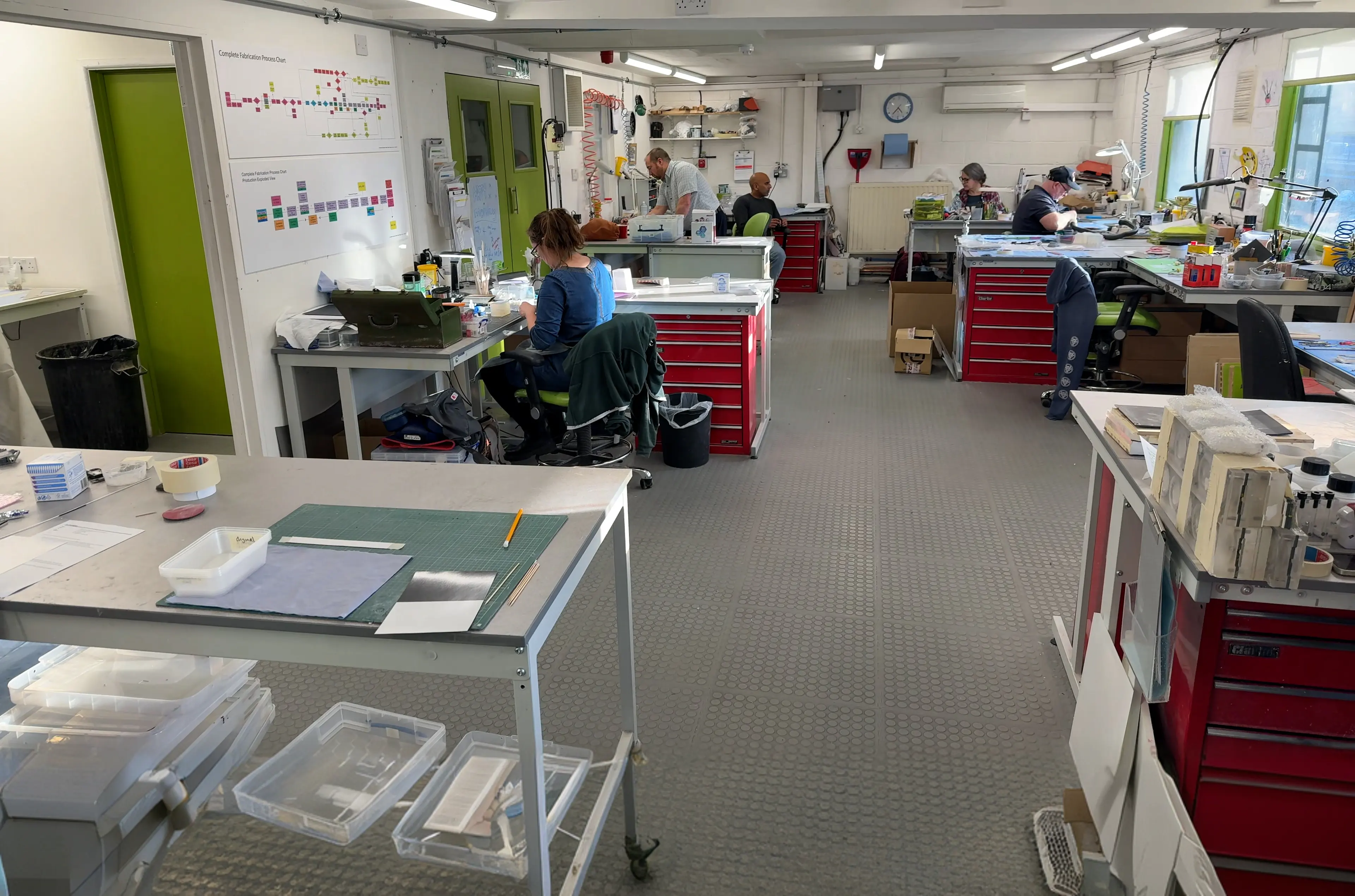
Looks-like, works-like models with inserts, assemblies and electronics fitted, ready for user trials, investor demos and design sign-off. See our model making services.
Production-standard finishes on prototype parts: colour matched to Pantone, RAL or your sample, metallic and soft-touch coatings and VDI textures, from two in-house spray booths.


Silicone and polyurethane elastomer seals and gaskets cast to your specification, with moulds made in-house, so your prototype seals like the real thing.
Self-coloured polyurethane parts close to injection-moulded quality, in batches of 10 to 500. Lead time is confirmed at quote.


Only have technical drawings? We can turn them into CAD data, then recommend the fastest route to a good part. Our prototyping checklist covers the rest.
We turn ideas into buildable CAD, with manufacture and assembly in mind, before the first prototype is made.


Once the prototype is signed off, we make bridge production runs of 1 to 500+ units while your production tooling is being made. For printed runs, see SLA batch production.
A quick comparison of our main processes. We confirm the exact tolerance and lead time for your part when we quote.
| Process | Typical tolerance | Standard turnaround | Best for |
|---|---|---|---|
| SLA 3D printing | ±0.15 mm | 24 hours | One-offs to batches of thousands (our largest was 5,000 parts): detailed prototypes, master patterns and clear parts |
| Carbon DLS | Confirmed at quote | Confirmed at quote | Production-quality parts in tough, flexible and elastomer resins, in batches of up to 1,000 small parts |
| FDM 3D printing | ±0.4 mm | Depends on part size and finish | Tough nylon, carbon-fibre and TPU parts |
| CNC machining | ±0.10 mm on most work | 3 days (24-hour rush available) | Metal and engineering-plastic parts |
| Vacuum casting | About ±0.2 mm on small parts, up to ±0.7 mm on large castings | About a week for 20 small parts; larger batches confirmed at quote | Batches of 10 to 500 self-coloured polyurethane parts |
Prototyping can feel confusing. We give impartial, straightforward advice that simplifies each stage, and feed development information back to your team as if we were in-house. We work with product designers, design engineers, design consultancies and manufacturers across medical, robotics, aerospace and consumer products, and we are ISO 9001 certified.
Most 3D printed parts ship the next day, and we quote fast.

SLA to ±0.15 mm and CNC to ±0.1 mm on most work, from the first prototype to production.

Certificates of Conformity for materials and manufacture, plus biocompatible options for patient-contact testing.
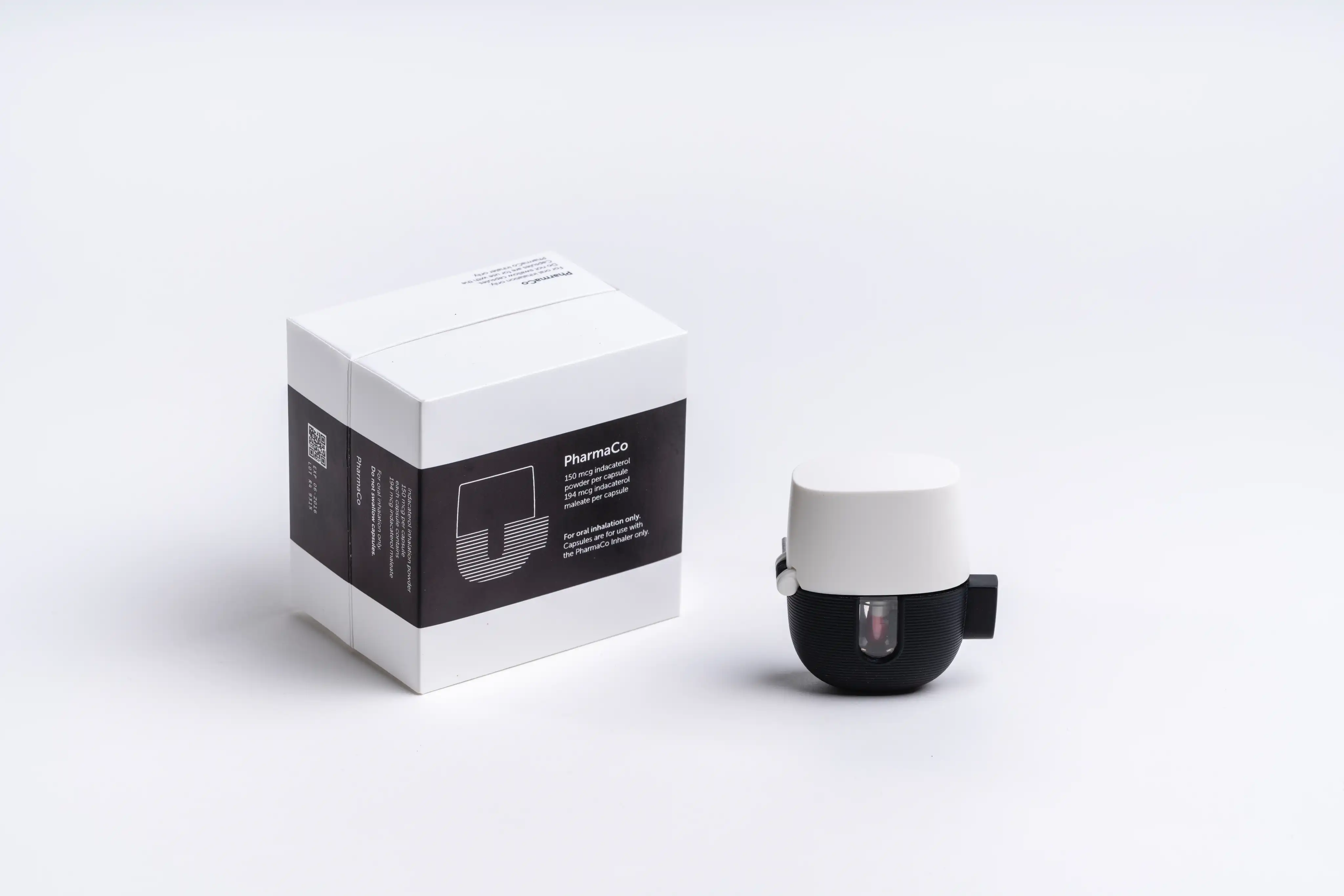
A few of the prototypes we have built for medical, consumer and product design clients.
A compact IPL hair removal device using LEDs instead of xenon flash lamps, plus its charging station. We produced 3D printed models so focus groups could test the ergonomics and design.
Read the IPL case studyA visual block model of an at-home fertility self-injector designed to look like a beauty product, showing its finishes, lighting effects and how it nests in the base.
Read the Piona case studyTwo fully working lawn mower prototypes, one petrol and one electric, CNC machined in production-intent materials and painted in production colours. They cut grass.
Read the Hayter case studyThe work speaks for itself. These numbers show the scale, speed and consistency behind it.

From concept to production across multiple sectors
Medical, defence, robotics, aerospace, automotive, marine and consumer products, among others
Partners return because we deliver what matters
Send us your CAD files and tell us your deadline. We quote fast and will do our best to match your timings. 3D printed parts can be on their way the next day.
We make prototypes by SLA, Carbon DLS and FDM 3D printing, CNC machining and vacuum casting, then paint, finish and assemble them in our Whittlesford workshop near Cambridge.
Standard SLA turnaround is 24 hours when capacity allows, and large parts need more planning. CNC machining is typically 3 days, with a 24-hour rush option. Painting or polishing adds at least a day. Vacuum casting 20 small parts takes about a week, and we confirm lead times for larger batches at quote.
Choose by quantity and purpose. SLA suits one to a few hundred parts while the design is changing. Vacuum casting suits 10 to 500 parts in production-like plastics. Carbon DLS suits small functional parts without tooling. CNC machining suits metal parts and tight tolerances.
SLA parts hold ±0.15 mm. CNC machining holds ±0.10 mm on most work, and vacuum casting holds about ±0.2 mm on small parts and up to ±0.7 mm on large castings.
Yes. Confidentiality is standard, and we can build SOPs and technical agreements into the workflow.
Anything from a single prototype to production batches. Our SLA batches are typically 20 to 200 parts, and the largest was 5,000. We have run Carbon DLS batches of 1,000 small parts, and vacuum casting covers 10 to 500. None of these needs injection-mould tooling.
Our workshop is at Unit 4B Lion Works, Station Road East, Whittlesford, Cambridge CB22 4WL, just south of Cambridge near junction 10 of the M11. We make prototypes for clients across the UK.
Yes. We are ISO 9001 certified by ISOQAR under UKAS accreditation (certificate 7774). Certificates of Conformity for materials and manufacture are available on request at quote stage.
Rapid prototyping is the quick making of physical models and working parts straight from CAD, so a design can be seen, handled and tested before money goes into production tooling. Most rapid prototypes are 3D printed, but CNC machining and vacuum casting are used when a part needs real materials or more copies.
No. 3D printing is the most common rapid prototyping method, but not the only one. We also CNC machine prototypes in metals and engineering plastics, and vacuum cast batches of 10 to 500 in polyurethanes. The right method depends on the material, quantity and finish the part needs.
It lets you find design problems, test fit and function, and show a product to users or investors before committing to tooling, while design changes are still cheap. The limits: a printed resin is not always the production material, and at hundreds or thousands of identical parts, injection moulding usually becomes cheaper per part.
Send us your CAD (STEP is best) or drawings through our contact page, with the quantity, material or finish you need and your deadline. We check the design, recommend a process and send a quote. Once you accept, SLA parts are usually printed that night. If you only have sketches or drawings, we can create the CAD for you.