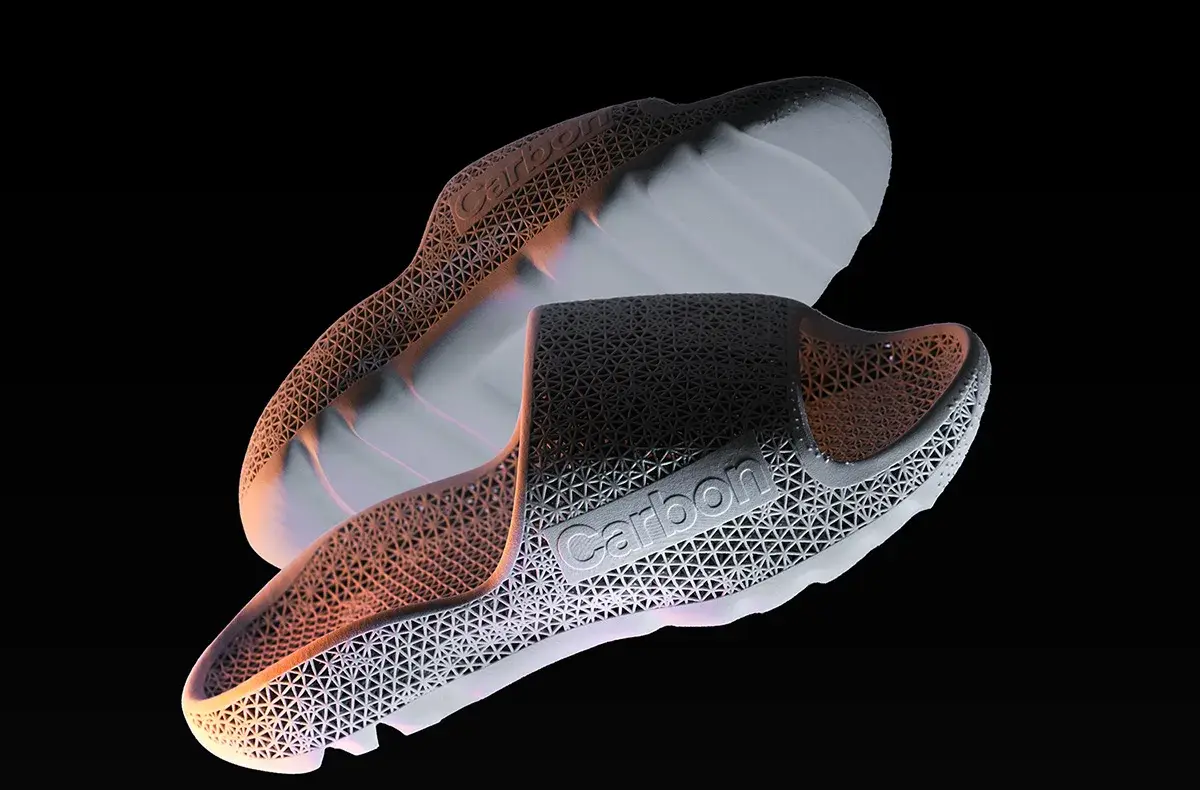
Carbon 3D printing for production-quality parts that behave like injection-moulded plastic, in rigid, flexible, elastomer and biocompatible Carbon resins, printed in Cambridge.
The process
Carbon DLS takes a part from prototype to low-volume production without tooling or set-up costs, and we have run batches of 1,000 small parts. The printer and resin that made the prototype can make the production batch, so the design can keep changing until you sign it off.
Carbon’s Digital Light Synthesis™ (DLS) process, built on its CLIP™ technology, cures liquid resin with projected light through an oxygen-permeable window. The part is then baked, and a second, heat-activated chemistry in the resin sets its final properties. You get resolution, surface finish and mechanical strength together, rather than trading one off against another.
We were the second company in the UK to partner with Carbon, and our team has been trained in depth on the process and its design rules. We can tell you whether DLS suits your part, which resin to use and how to design for it.
Every Carbon part can be finished in-house: painted, textured, or assembled with inserts and other components. Call 01223 836837 or email info@compfab.co.uk to talk through your project.
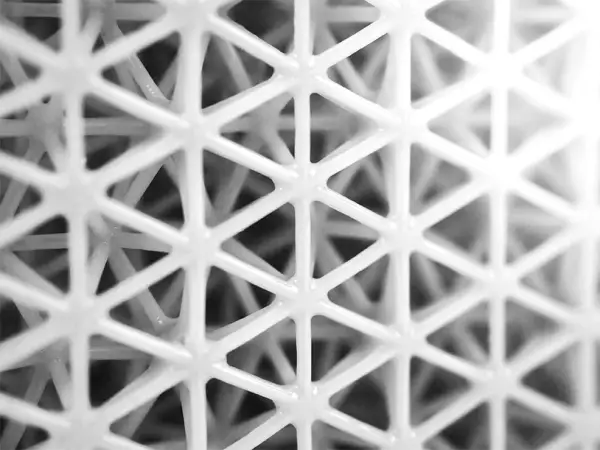
Layer-by-layer 3D printing gives parts that are weaker in some directions than others, depending on how they were built. Carbon DLS parts have predictable, isotropic properties: they are solid inside, like injection-moulded parts, and behave the same in every direction.
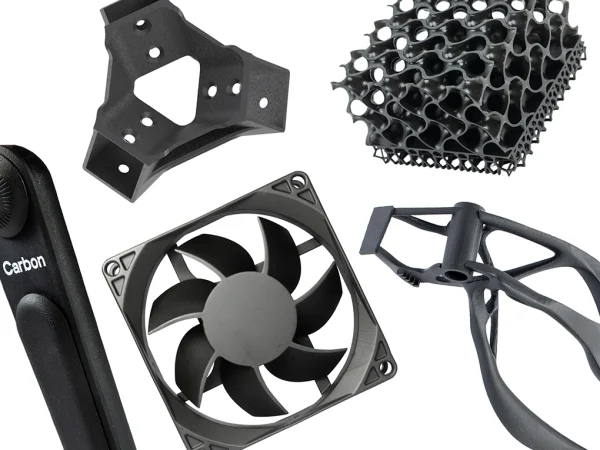
Rigid: EPX 82 (tensile 80 MPa, HDT 130 °C) and RPU 70 (tough, HDT 60 °C). Flame-retardant: EPX 86FR (UL 94 V-0). Semi-rigid: FPU 50, for living hinges and friction fits. Elastomers: EPU 40, EPU 45 and EPU Pro 50 and 90. Biocompatible: MPU 100 (sterilisable) and SIL 30 (soft, for skin contact).
See every Carbon DLS material and data sheet we run, or read about medical device prototyping and 3D printing in Cambridge.
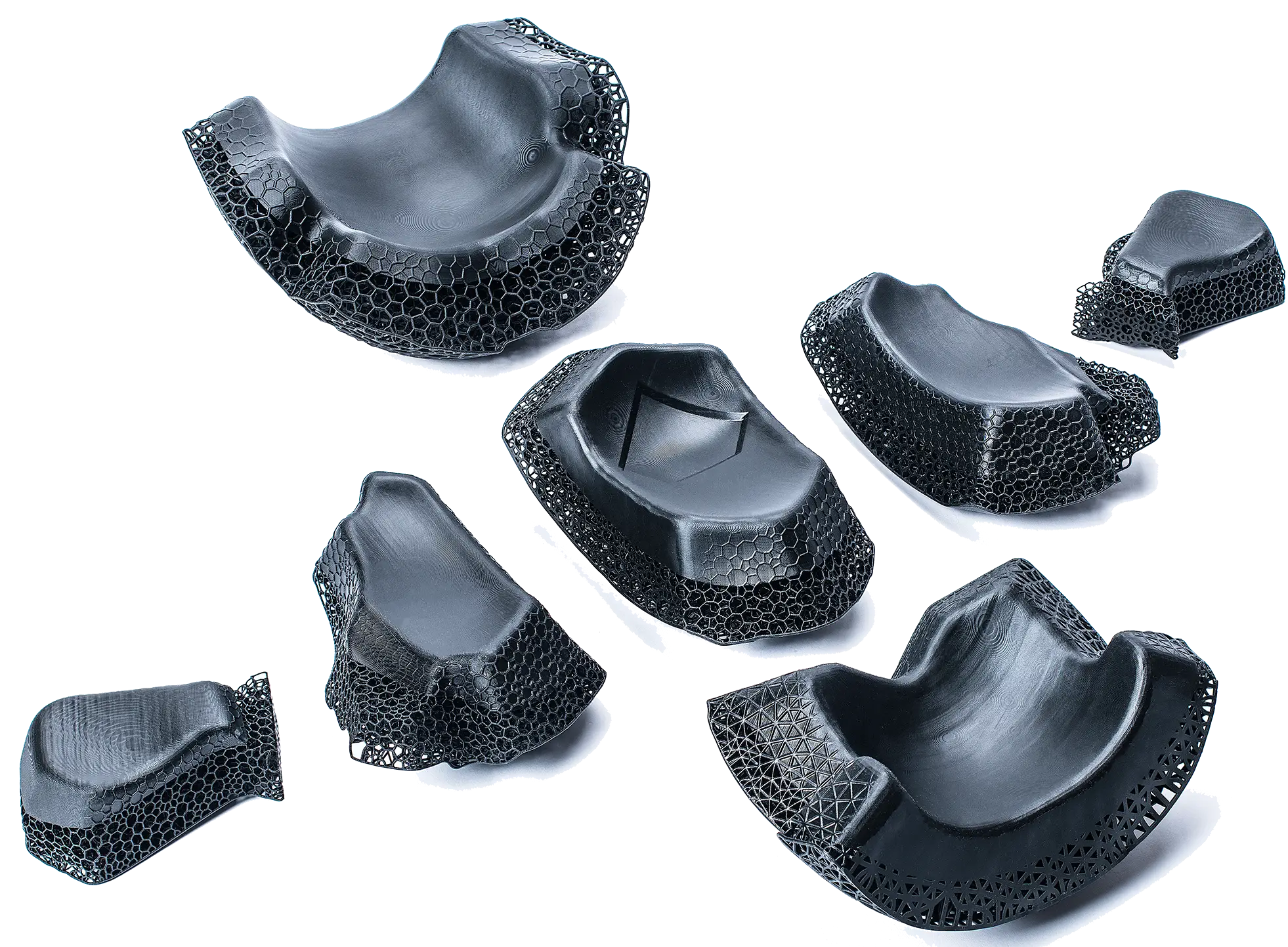
Carbon Digital Light Synthesis cures liquid resin with projected light through an oxygen-permeable window, then bakes the part so a second chemistry sets its final properties. Parts are solid and behave the same in every direction, like injection-moulded parts.
Yes. It goes from prototype to low-volume production without tooling or set-up costs, and we have run batches of 1,000 small parts.
EPX 82, RPU 70, EPX 86FR, FPU 50, EPU 40, EPU 45, EPU Pro 50 and 90, MPU 100 and SIL 30.
Yes. MPU 100 is biocompatible and sterilisable, and SIL 30 is a soft material for skin contact. We supply the material data for your own clinical assessment.
Yes. Every Carbon part can be painted, textured or assembled with inserts and other components in-house.
Send us your CAD file and the quantity you need, and tell us how the part will be used so we can recommend a resin.